"CDCS 64G Inclusive Agribusiness model- sofer technology adoption by farmers and entrepreneurs ensuring direct connectivity with consumer networks."
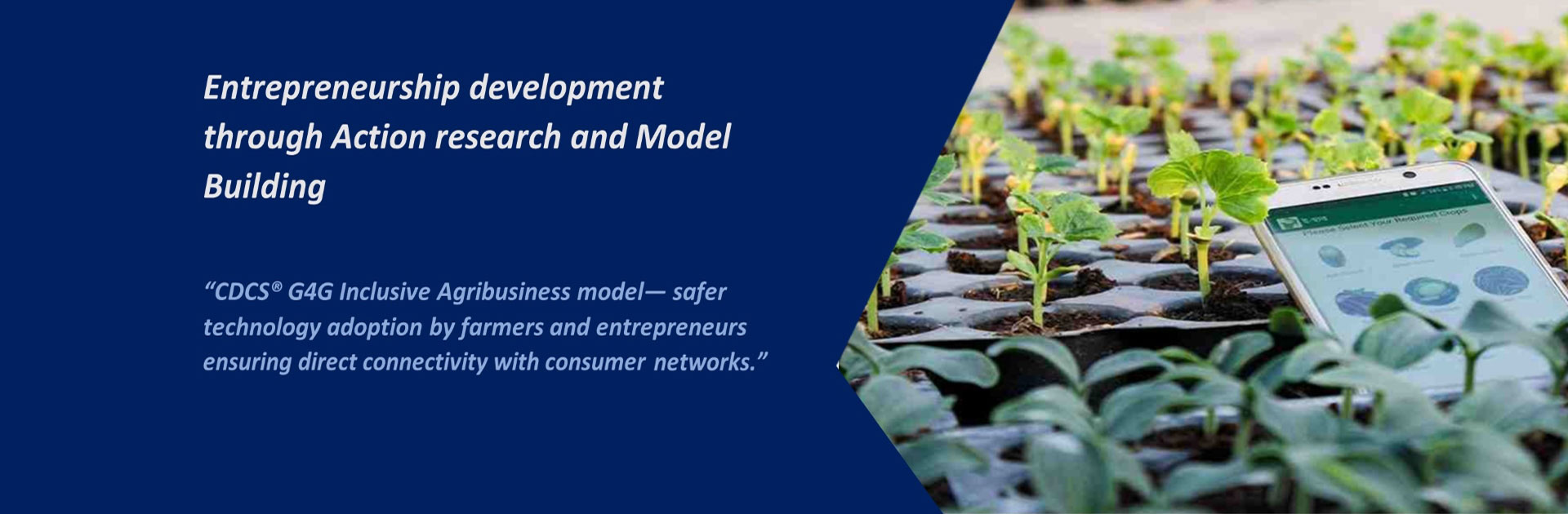
G4G Inclusive Agribusiness Model (G4G-IAM), the transformative framework for production and marketing of safe, fair, and sustainable agricultural produce, developed by CDCS®, eliminates unnecessary intermediaries, ensures fair prices for farmers and quality produce for consumers. The model operates through two key derivatives — a shortened value chain, where farmer groups directly supply distant urban wholesalers, and a direct-to-consumer model, where producers sell straight to consumers through G4G’s innovative platforms such as Community Farmers’ Markets, Weekend Farmers’ Markets, and Mobile Farmers’ Markets. Even amid the COVID-19 pandemic, this approach proved remarkably robust, ensuring uninterrupted access to safe food and steady income for farmers.
The G4G model has delivered measurable and market-driven impact. Farmers under G4G made the first-ever private investment in post-harvest management, establishing a Hot Water Treatment (HWT) plant that processed 22.5 tonnes of mangoes under a fee-based “postharvest-management-as-a-service” model. Despite pandemic disruptions, G4G groups produced and sold 1,393 tonnes of safe produce—including tomato, banana, bitter gourd, and mango—through sustainable market channels. The initiative also demonstrated a powerful crowding-in effect, attracting new farmer groups like G4G Hobigonj, which sold over 31 tonnes of fresh produce through G4G community markets and weekend markets in 2020.
From a sustainability perspective, CDCS® has successfully established and equipped multiple initiatives under the G4G banner — including G4G Agribusiness Groups, G4G Agribusiness Centers, G4G Enterprise Network, FarmersEnd (digital marketing platform), and aamader, a specialized retail outlet. The project also activated the Farmers Academy, an e-learning platform for knowledge and technology dissemination. Together, these initiatives create a connected and resilient ecosystem that integrates production, post-harvest management, and market access—driving both local empowerment and systemic change.